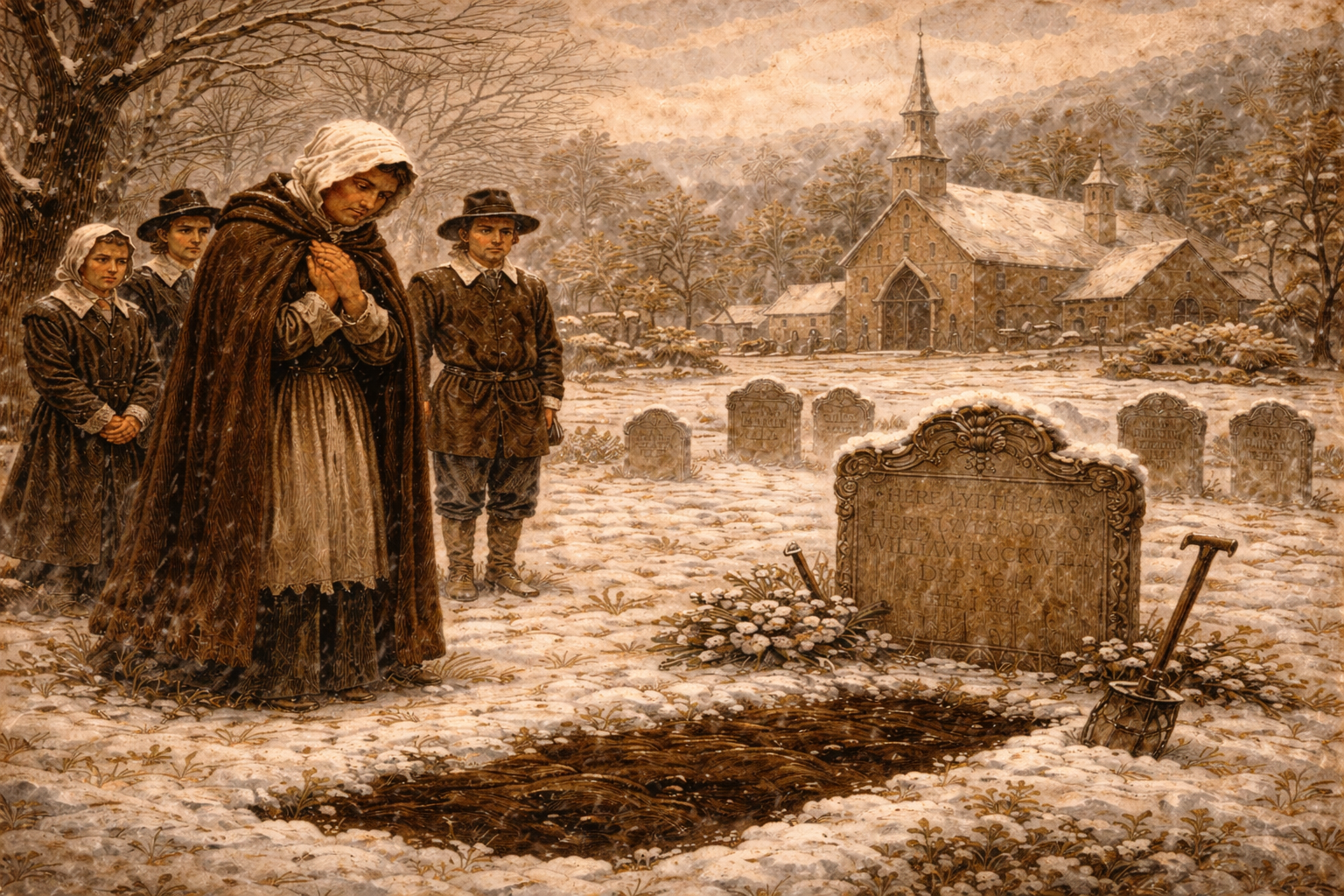
William Rockwell died in Windsor, Connecticut, in 1640. The book treats his death as the close of the first generation of the Rockwell family in New England, after a decade marked by migration, civic service, and church office.
The book records William Rockwell’s death in Windsor in the year 1640, only a few years after his removal from Dorchester. No extended account of his final illness or circumstances is preserved in surviving records.
By the time of his death, Rockwell had lived in New England for approximately ten years. During that period, he had crossed the Atlantic with his family, endured the earliest hardships of settlement, served as a deacon of the Dorchester church, sat on a jury in a capital case, administered an estate, and moved once more to the frontier settlement of Windsor.
The book presents his life as representative of the colony’s first generation: men who arrived in middle age, carried civic and religious responsibility from the outset, and often did not live long enough to see the settlements they founded reach maturity.
Rockwell’s death marked the end of his direct participation in the public life of the colony, but not the end of the family’s presence. His widow and children remained, forming the foundation of subsequent generations whose lives would unfold in Connecticut and beyond.
Source: The Rockwell Family in One Line of Descent, noting William Rockwell’s death in Windsor in 1640 and summarizing his New England career.
📍 Historical Context & Related Content
Windsor, Connecticut
Windsor is recognized as the first English settlement in Connecticut, established in 1633, just prior to William Rockwell’s move there in the spring of 1637. This move was part of a larger migration from Dorchester to the Connecticut River Valley, motivated by the quest for fertile land and religious freedom.Did you know? Windsor was originally called “Matianuck” by the Native American tribes in the area, and the first trading post was established by the Dutch in 1633, known as the House of Hope.
Related: William Rockwell’s Move to Windsor: A New Beginning. Relevant tags/categories include: 1637, Migration, Colonial Settlements, Connecticut River Valley, Windsor.

Leave a Reply